

A working owner's perspective
How I build businesses with AI agents alongside a full-time job
I work in international leadership. Alongside that role, I am building and managing a city discovery business, a children's book series and an avatar video service. AI agents make that combination possible for me.
I estimate that I do around 90% of the work on these ventures with AI agents. That is my description of how I work, rather than a time-tracking study or a claim that 90% of every business can run unattended. I still choose the offer, decide what deserves attention and take responsibility for what goes out.
The useful question is what happens between an idea and a finished product. In my projects, that can mean a working mobile website, a book with a functioning Kindle table of contents, or a clear brief for an avatar video. Each needs a different workflow.
Three businesses, three different kinds of work
City Mystery Trail: a game has to work outside the document
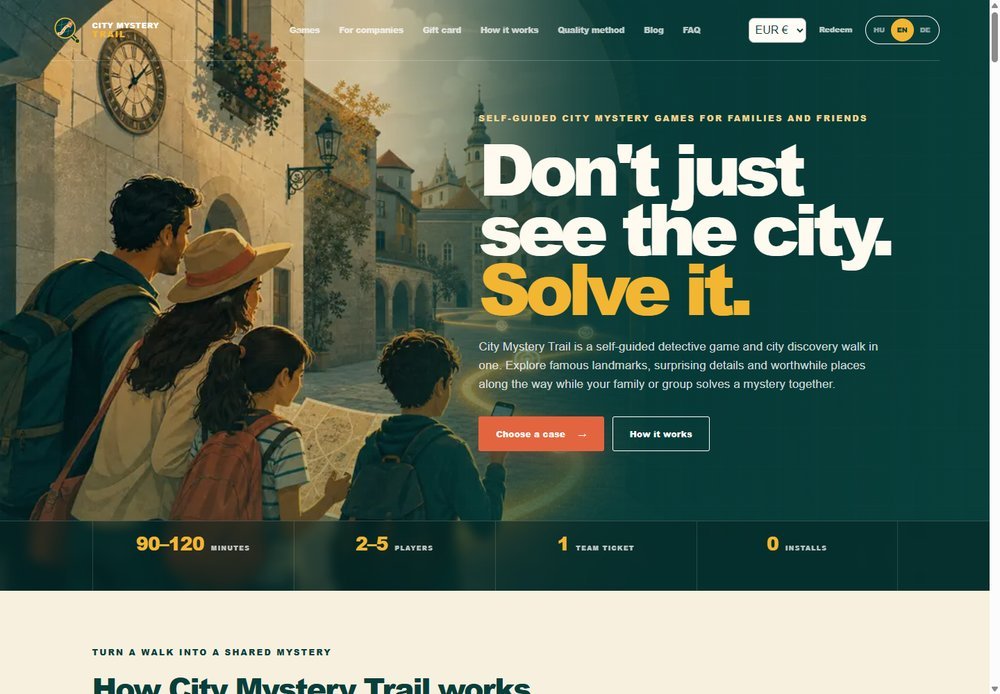
City Mystery Trail offers self-guided city detective adventures. Players explore real places and follow the game on their phones. For me, this is a useful example of how much sits around the initial idea: the story, the website, the languages, the player journey and the ongoing work of explaining the offer.
I use Codex for implementation and technical checks. Research and preparation can be handed to Hermes with a defined scope, such as reviewing material or preparing a partner-facing proposal. Those roles support each other: prepared information becomes something that can actually be built, checked and maintained.
A convincing puzzle on a screen still needs to make sense at the location. A translated page still needs to fit a small phone. Those are separate checks. This project keeps reminding me to define completion from the player's perspective: can someone understand where to go and what to do next?
The Little Compass Library: writing and production need different eyes

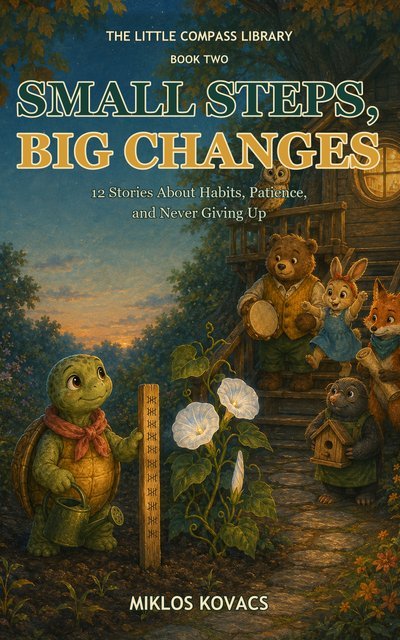
My two Little Compass books are Brave Enough to Begin, with 12 stories about fear, trying and courage, and Small Steps, Big Changes, with 12 stories about habits, patience and perseverance.
The second book gives a concrete example of how I combined Codex and Claude. Codex prepared the first draft. Claude then worked on the editorial pass: keeping the story structure while making the language and dialogue more natural. One recurring change was removing a narrator's explanation when the character's action already showed the lesson. Another was making adult characters sound less like coaches delivering a speech.
Codex then handled the production work around the approved manuscript and its checks. Print and Kindle required separate outputs. The Kindle contents needed working links; print needed the right page geometry. In one production check, a document conversion changed the intended print layout. The answer was to return to the clean source and regenerate it.
That is why I value a second, distinct review task. “Make this better” is vague. “Keep the plot, remove redundant explanations and flag changes that alter the meaning” gives the reviewer something useful to do. I keep the accepted manuscript separate from later formatting work so a technical repair does not silently become a rewrite.
AvatarStudio.hu: turn an offer into a repeatable creative process
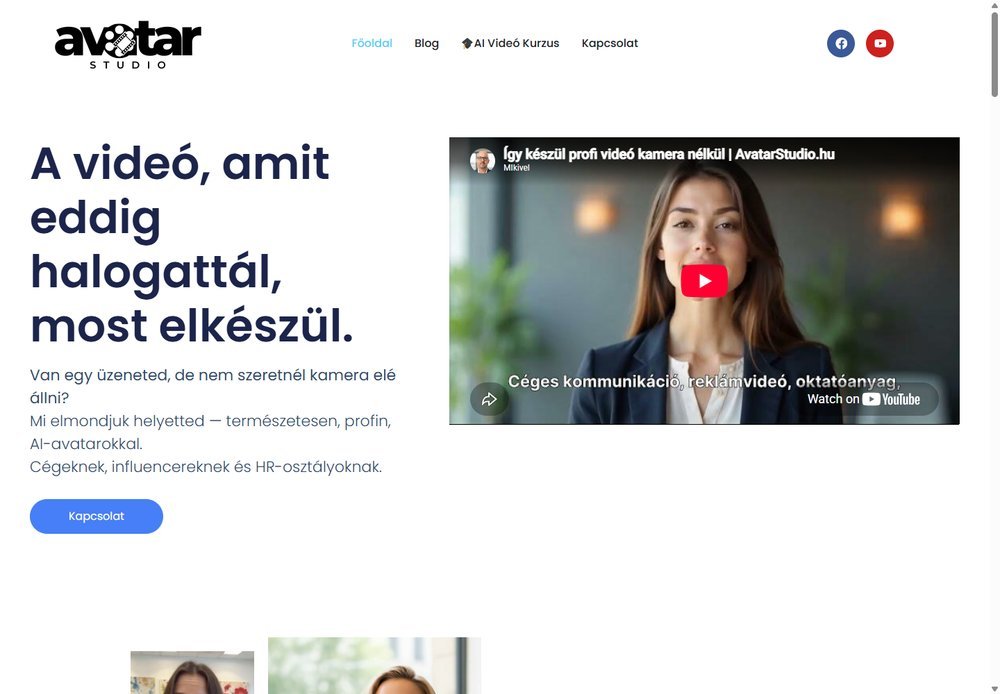
AvatarStudio.hu is my avatar video service. Its offer includes company and social videos, training and onboarding content, and multilingual communication. Here, the useful unit of work is a clear video brief: who is watching, what they need to understand, what the presenter should say and what happens next.
I use the agents to help structure the offer and the work around it. A language agent can prepare a script, a language variant or a production brief; the actual presenter video needs the appropriate avatar video tool. Codex helps connect the surrounding files, website and repeatable steps. These are complementary jobs.
For this kind of service, I want the review to reach the delivered video: pronunciation, subtitles, pacing and the call to action. A polished script is one stage of the job. The customer experiences the video.
How I divide work between Codex, Hermes and myself
| Who | What I assign | What comes back |
|---|---|---|
| Me | Business direction, priorities, acceptance criteria and consequential decisions | A clear brief and a decision on the result |
| Hermes | Bounded research, preparation and review in my current workflow | Source-backed material, files and unresolved questions |
| Codex | Implementation, file production, integration and verification | A usable deliverable with evidence of what was checked |
| Specialist tools | Tasks such as avatar video rendering or book previewing | The output in the format the audience will actually use |
Codex has become useful to me beyond writing software: much of the work involves changing real project files and checking what those changes produced. OpenAI's Codex app overview describes how skills extend it into workflows involving tools, documents and other deliverables. My own setup depends on the tools and access I have actually connected.
I also keep recurring instructions in reusable workflows. Hermes supports this through its skills system. The practical benefit for me is consistency: a repeated task can start with the same standards, expected files and checks, instead of rebuilding the instructions from memory.
How cloud-hosted Hermes works with my Codex workspace
My Hermes agent runs on a hosted server. Codex works with my project environment and the tools available there. I have verified a direct connection that lets Codex send an assignment to Hermes and receive a response. I also checked that a follow-up message could refer back to the earlier assignment.
The two environments do not automatically share all their files. I need to specify which source material goes across, where the finished files are returned and how Codex should verify them. A message saying “finished” is insufficient if the deliverable has not arrived.
- Define the result: one bounded assignment, its sources and the expected output.
- Send the necessary context: the current brief and relevant files, with the scope made explicit.
- Collect the result: retrieve the actual material and identify open questions.
- Check and use it: Codex verifies the files, integrates the accepted result and reports what is ready.
The server gives Hermes a separate place to run. Local checks still depend on the local environment being available. I do not assume that hosting one agent in the cloud makes every connected process operate continuously.
The brief matters more than adding another agent
When I am busy, the expensive part is reopening a task and discovering that the agent solved a different problem. A short, precise assignment helps avoid that. This is a reusable example of the structure I use:
A brief you can adapt
Outcome: Prepare one service page that a first-time visitor can understand.
Inputs: Use the attached offer, existing brand assets and the current website. Identify missing facts.
Scope: Explain the audience, service, process and next step. Do not invent customer results, prices or delivery promises.
Deliverable: Page copy, proposed layout, source links and a short list of unresolved questions.
Definition of done: The approved version is implemented, images and links work, and the public page has been checked on desktop and mobile.
Decision boundary: Prepare the work within this scope. Use the publication authority given for this task; seek a decision if the scope changes materially.
The last line matters because different assignments carry different authority. Preparing a partner message, sending it and receiving a reply are different states. I want the workflow to tell me which state it has reached.
A small website change shows why verification matters
When I added these businesses to my homepage, saving the new content in WordPress was only part of the job. The public homepage was using a separate template, so the new block also needed to be connected to what visitors actually saw. The work was finished after checking the live page and its mobile version.
This is the kind of detail hidden by a statement such as “AI built my website.” Much of the value comes from following the task through: create, inspect, fix and check again where the visitor will experience it.
What I would start with if I had one business
I would choose one recurring task with an observable result: a reviewed content draft, a checked page update or a structured customer enquiry. I would record the time spent briefing, reviewing and correcting it, then compare that with the previous process. An agent's output count tells me less than how much usable work reaches the finish line.
My three ventures demonstrate what I am building with this approach. Their websites and product pages let you inspect the offers for yourself; they do not establish a particular revenue or return on investment. The gain I can speak to personally is being able to move several substantial projects forward alongside my leadership role.
If you want a more structured starting point, my guide to testing one AI workflow covers the first trial, and my automation maintenance guide looks at the work after launch. I keep coming back to the same practical question: what can I delegate clearly, and how will I know it has been done well?
This account describes my own projects and workflow as of September 22, 2026. The 90% figure is my estimate of work carried out with agent support. Magyar változat.