

AI Automation for SMBs
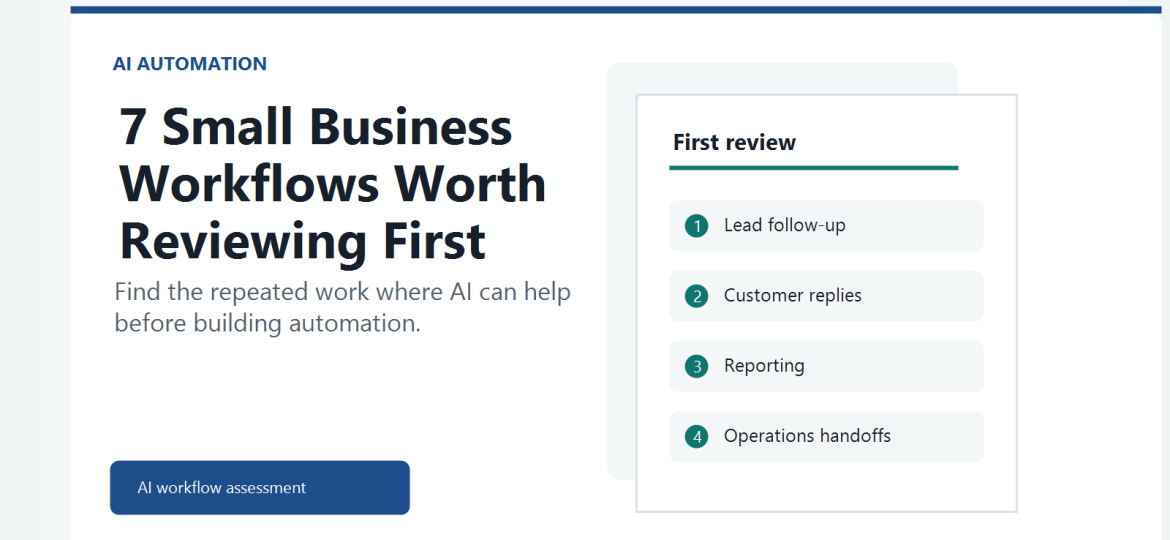
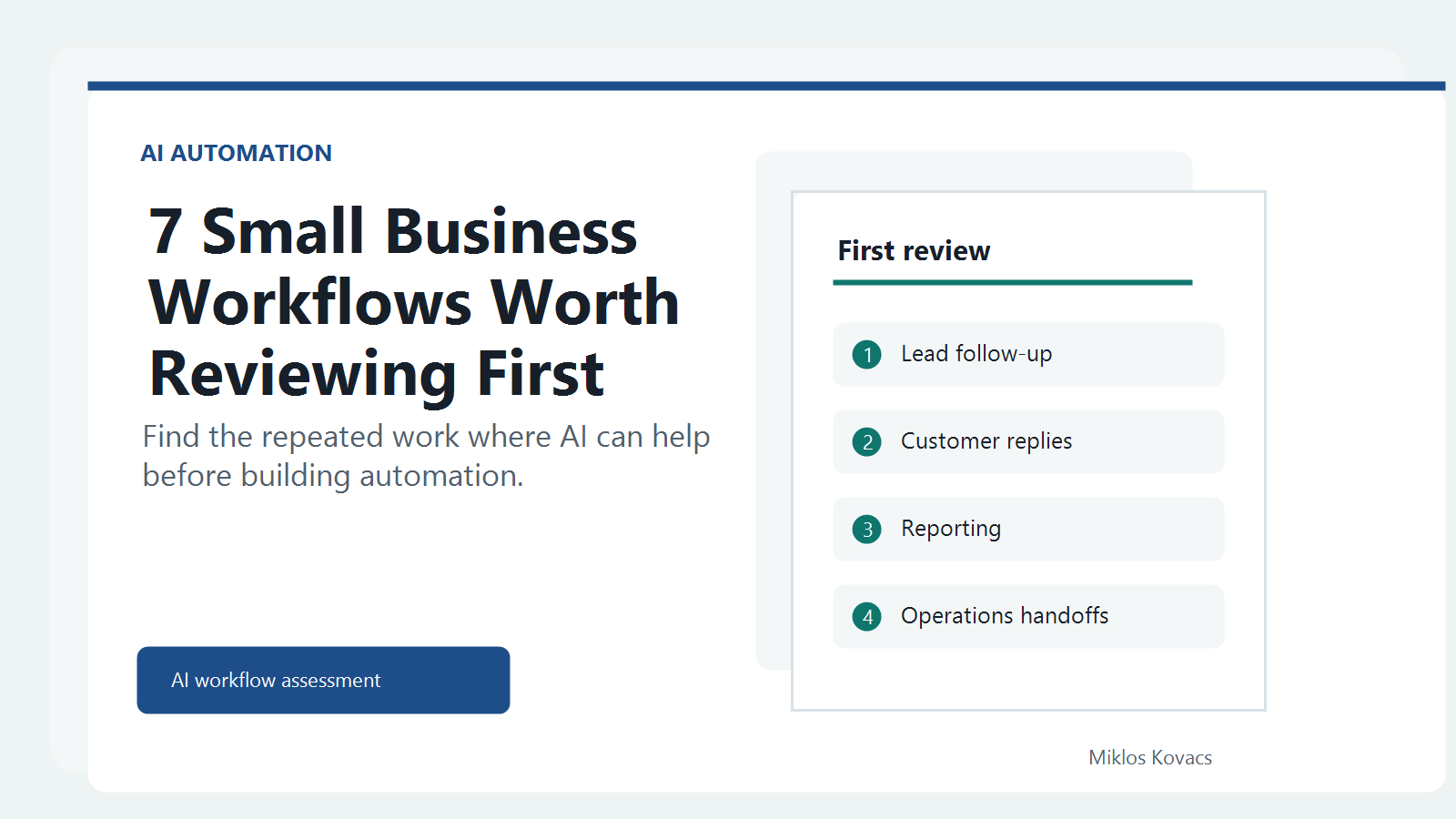
AI Automation For Small Business: 7 Workflows Worth Reviewing First
AI automation works best in small businesses when it starts with repeated work. These seven workflows are worth reviewing before you buy another tool or start a larger implementation project.
1. Inbound lead intake and follow-up
Leads often arrive with scattered details. AI can summarize the request, classify fit, identify missing information, and draft a reviewed follow-up. This is a strong first workflow because it sits close to revenue.
2. Customer reply preparation
Many customer replies are not fully new. They require context, tone, and a clear next step. AI can prepare a draft based on known policies, previous messages, and internal notes, while a person approves the final reply.
3. Weekly reporting summaries
If someone builds the same report every week, AI can help turn known inputs into a management summary. The goal is not to hide the numbers. The goal is to reduce manual assembly and surface what changed.
4. Quote and proposal preparation
AI can prepare first drafts, gather required details, and create a checklist before a quote or proposal is reviewed. This is useful when the owner is the bottleneck for every customer-specific response.
5. Internal knowledge search
When the same person keeps answering the same internal questions, AI may help employees find draft answers from approved documents. Keep human review for sensitive or uncertain topics.
6. Onboarding handoffs
After a sale, information often has to move from sales to delivery. AI can summarize the deal, extract commitments, prepare onboarding notes, and create a task checklist for review.
7. Support triage
AI can classify incoming support requests, suggest urgency, summarize the issue, and route it to the right owner. This can reduce manual sorting while keeping final judgment with the team.
How to choose: pick the workflow with the best mix of frequency, business impact, clear inputs, and easy human review. Do not start with the most complicated workflow just because it sounds impressive.
Want help finding your first workflow? Start with the free AI Workflow Assessment and get an initial AI leverage signal.
If you want to see what a deeper review looks like, open the sample assessment or review the AI Workflow Assessment - $797.
The main point: AI automation for small business should start with a workflow the team already recognizes. That is where trust and value usually begin.
