

Small Business AI
How To Use AI In A Small Business Without Wasting Money
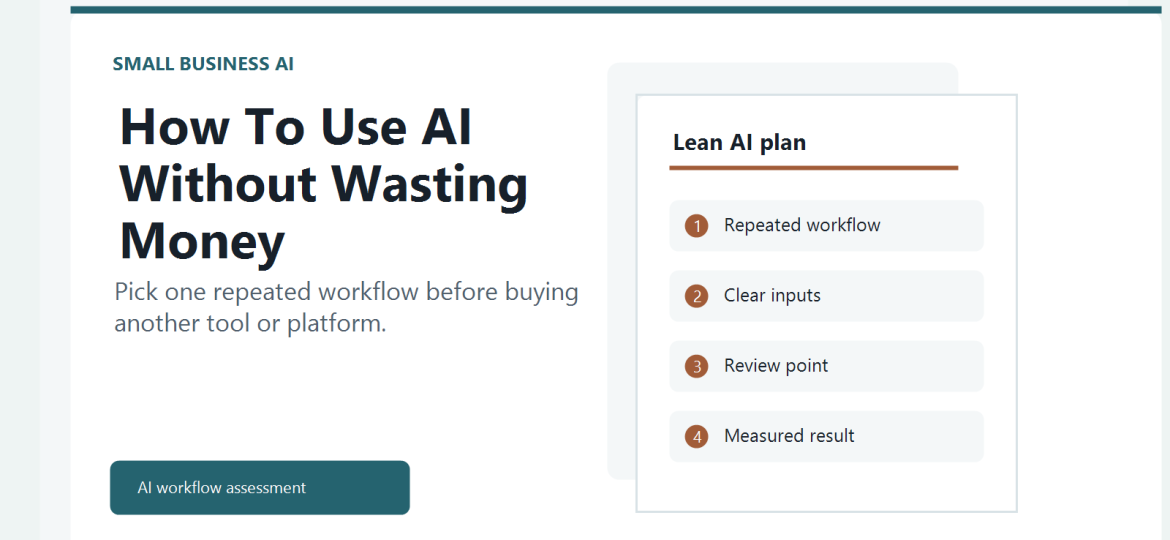
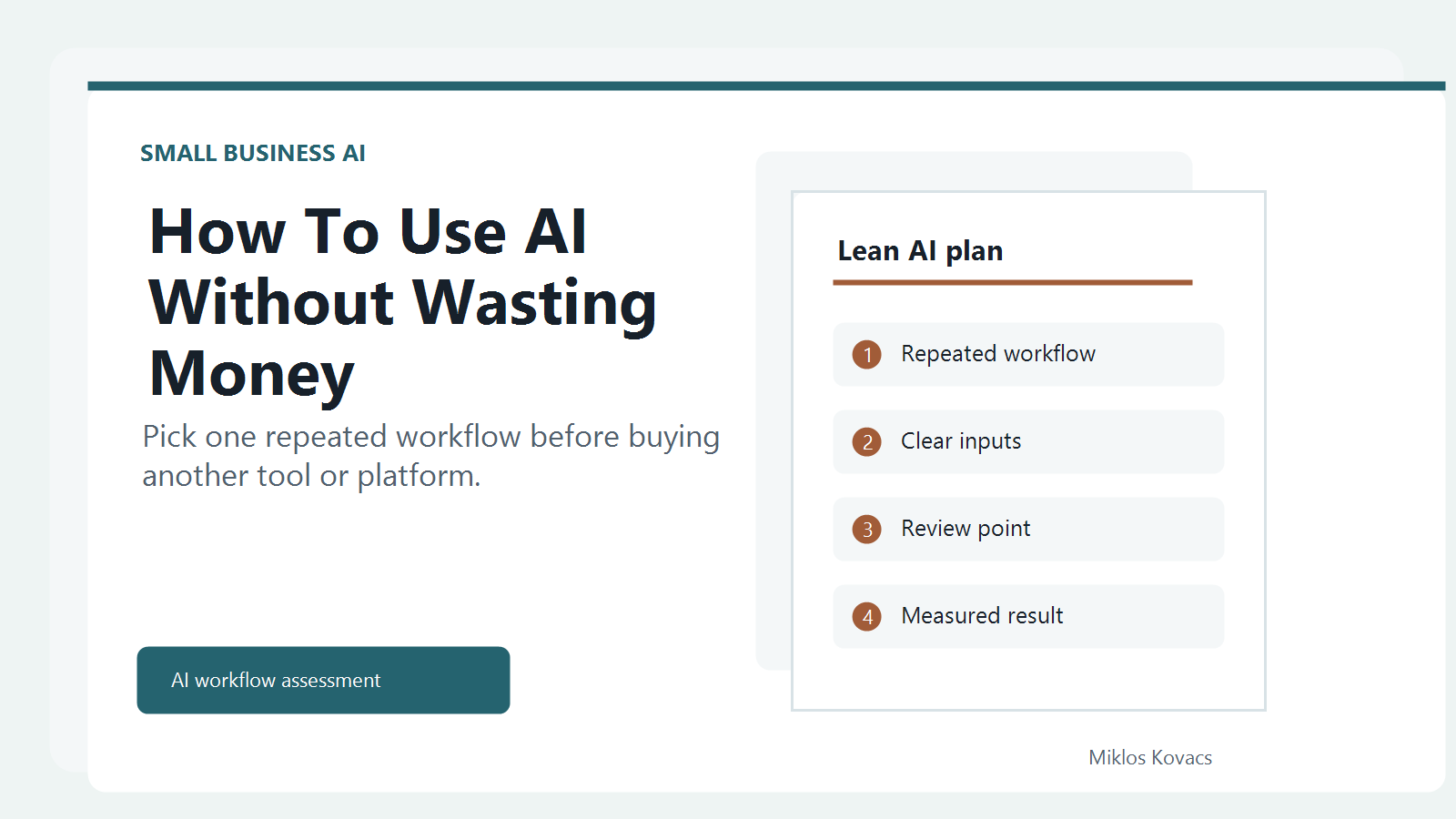
The safest way to use AI in a small business is not to buy more tools. It is to choose one repeated workflow, improve a small part of it, and keep human review where the business still needs judgment.
AI feels urgent because the tools are changing quickly. That urgency makes many owners jump straight into subscriptions, demos, courses, or random experiments. A few of those experiments help. Many become another monthly cost.
Small businesses do not need to use AI everywhere. They need to find where AI can reduce repeated work without making the business harder to manage.
Start with one repeated workflow
Look for work that happens every week and follows a pattern. Good first candidates include lead follow-up, customer replies, quote preparation, call summaries, internal knowledge search, weekly reporting, invoice checks, onboarding notes, and support triage.
Do not start with the biggest possible AI project. Start with the workflow that is frequent, visible, and annoying enough that people will notice when it improves.
Ask what AI should prepare
For most SMBs, the first useful AI role is preparation. AI can draft, summarize, classify, extract, compare, or prepare a next step. A person can then review the output.
That may sound less exciting than full automation, but it is often more useful. It lets the team build trust, check quality, and avoid handing away decisions too early.
Use your current tools first
Before buying something new, check what your current tools already support. Your CRM, email platform, project management tool, spreadsheet system, or helpdesk may already hold the data that the first workflow needs.
The best first AI workflow often uses ordinary systems. A lead comes in through a form, gets summarized, receives a suggested next action, and creates a reviewed draft follow-up. That can be more valuable than a new AI platform nobody knows how to use.
Define the human review point
Human review is not a weakness. It is how small businesses keep quality and trust while using AI.
Keep human review when the output affects a customer, money, compliance, legal risk, reputation, or an important internal decision. AI can prepare the work. A person approves it.
Simple rule: if a mistake would be embarrassing, expensive, or hard to reverse, do not make the first version fully automatic.
Measure something concrete
Do not measure the first AI project by how impressive it sounds. Measure it by whether the workflow got easier.
Useful measures include faster response time, fewer missed follow-ups, less manual copying, clearer handoffs, fewer repeated internal questions, or less owner involvement in routine preparation work.
Use a free assessment before spending
If you are not sure where AI fits yet, start with a first signal. A free assessment can help you identify the likely leverage area before you buy tools or pay for implementation.
Want a first signal? Take the free AI Workflow Assessment and see where AI may create practical leverage in your business.
If you already want a deeper recommendation, review the AI Workflow Assessment - $797 or see the sample assessment.
The main point: AI becomes useful when it is attached to a real business workflow. Start there, and you are much less likely to waste money.
